
Category: Newsletter
-

Issue 7, “The Architecture of long-term courage“, gave you the four-layer architecture for building sustainable courage over time. That architecture answers one question: how do you build a founder identity that holds up under long-term pressure? There is a second question it does not answer, though: “Why is this specific execution failing right now –…
-

I don’t believe you’re the founder who started this business. The evidence has accumulated. The capabilities have expanded, and the market has confirmed what the early stage only promised, but your identity hasn’t kept pace. The identity built during the survival stage – the defaults, the behaviours, the automatic way you show up is still…
-
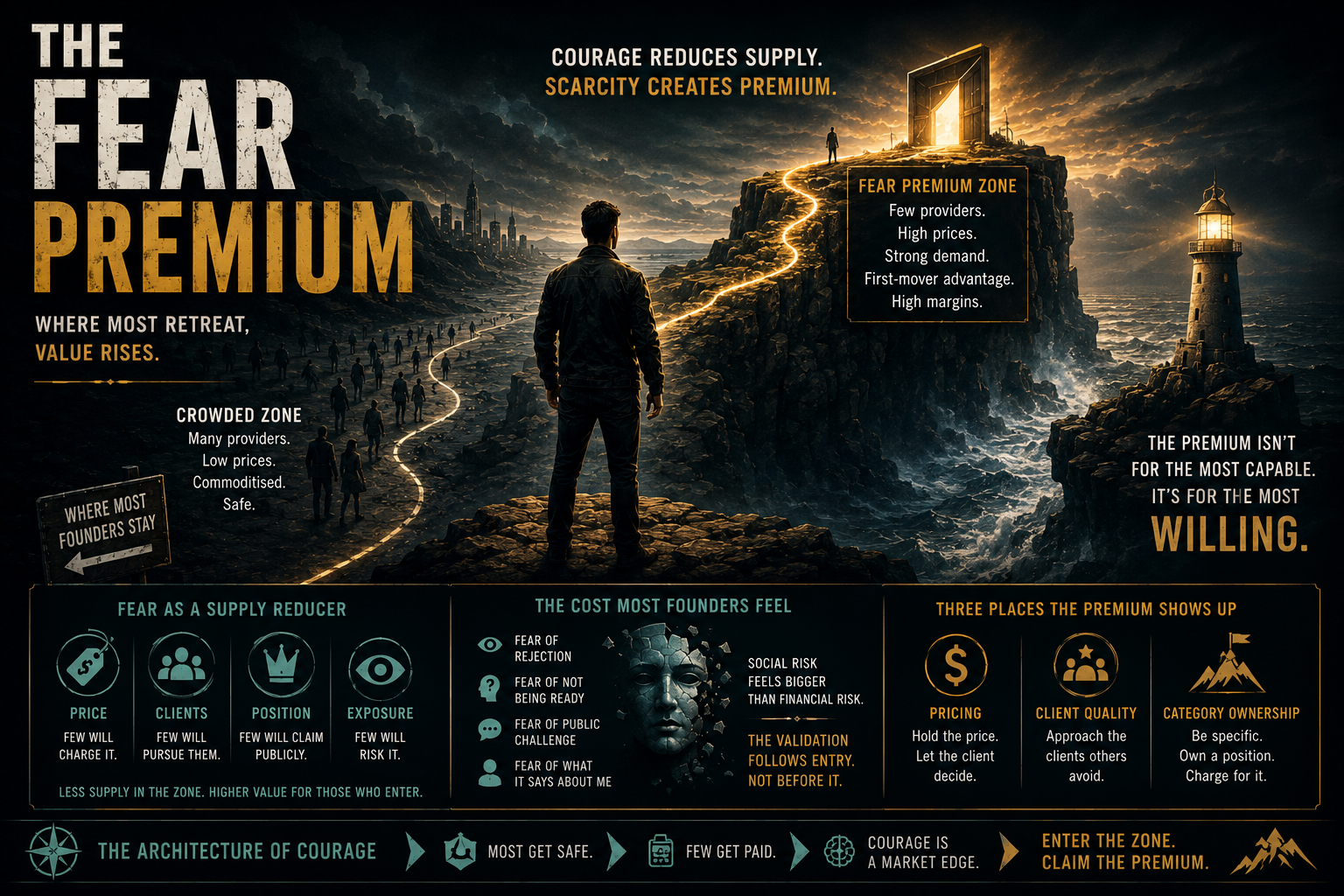
There is a reason most founders price based on what the market will accept, even though the highest-margin founders’ price is based on where they are willing to go and not fear. These are not the same calculation. There is a zone in every market where margins are structurally higher, not because the work is…
-
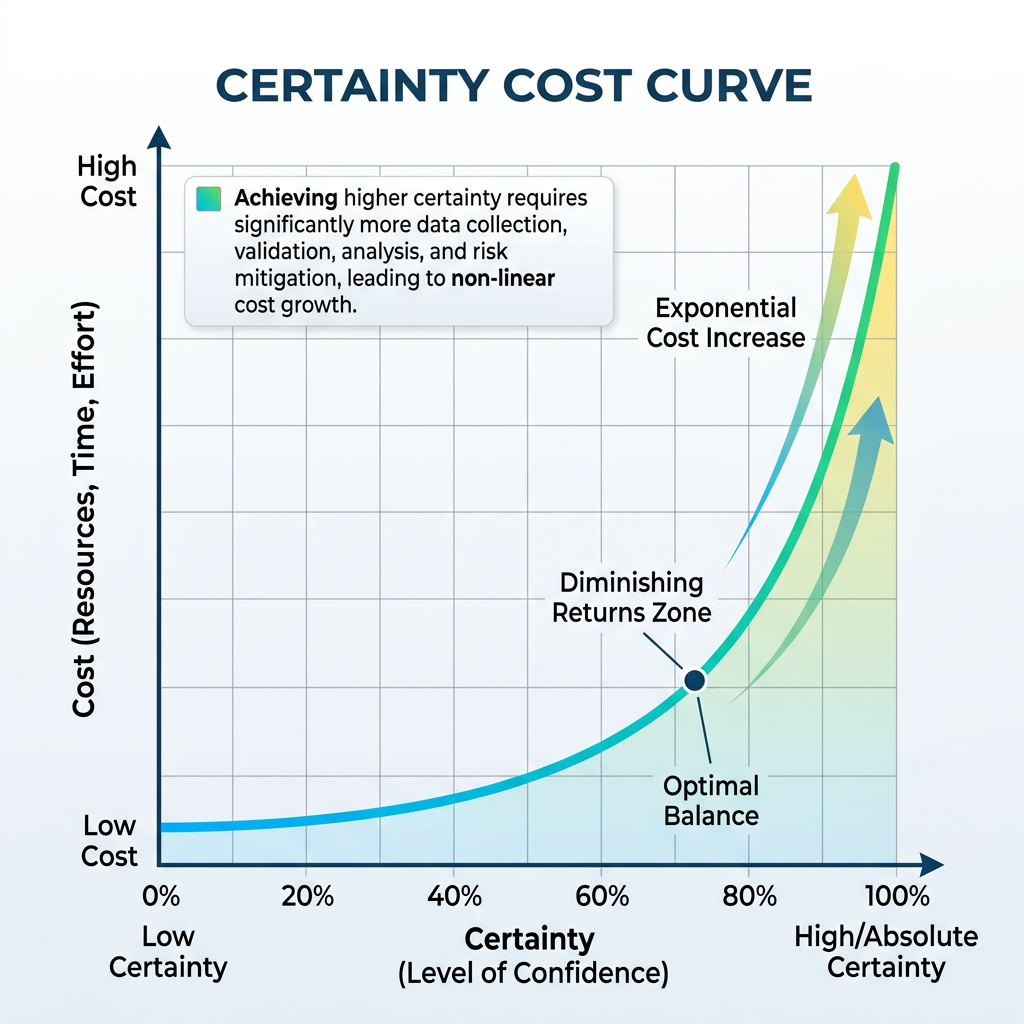
Every founder has been told that good decisions require good information. This is true. What nobody tells you is that information has a cost curve. At low levels of certainty, additional information meaningfully reduces risk. After a threshold, the returns diminish sharply while the costs keep rising. Most scaling founders crossed that threshold weeks ago,…
-
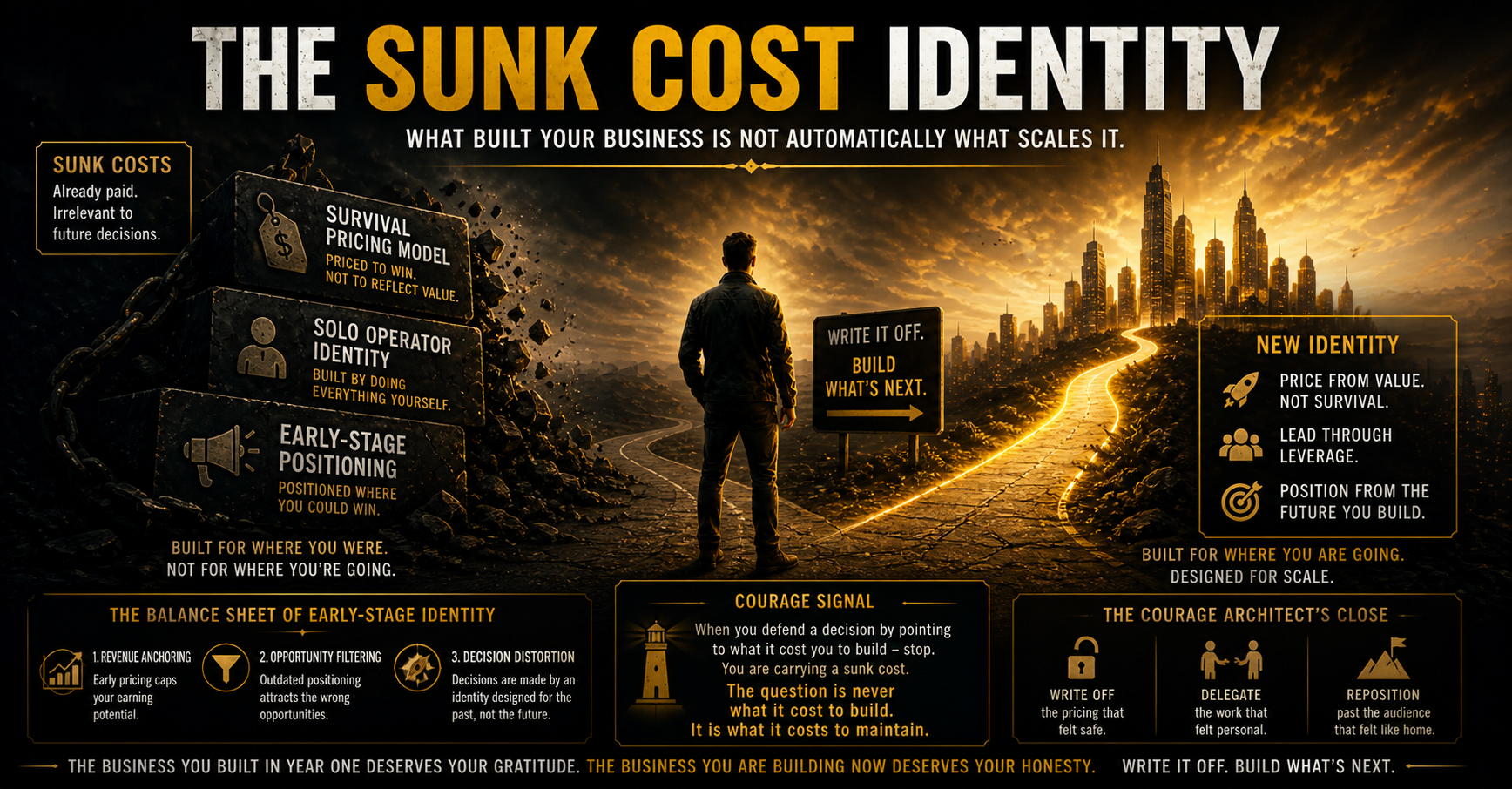
When you find yourself defending a business decision by pointing to what it cost you to build – the time, the relationships, the early sacrifices – you are not making a strategic argument. You are carrying a sunk cost. The question is never what it cost to build. It is what it costs to maintain.
-
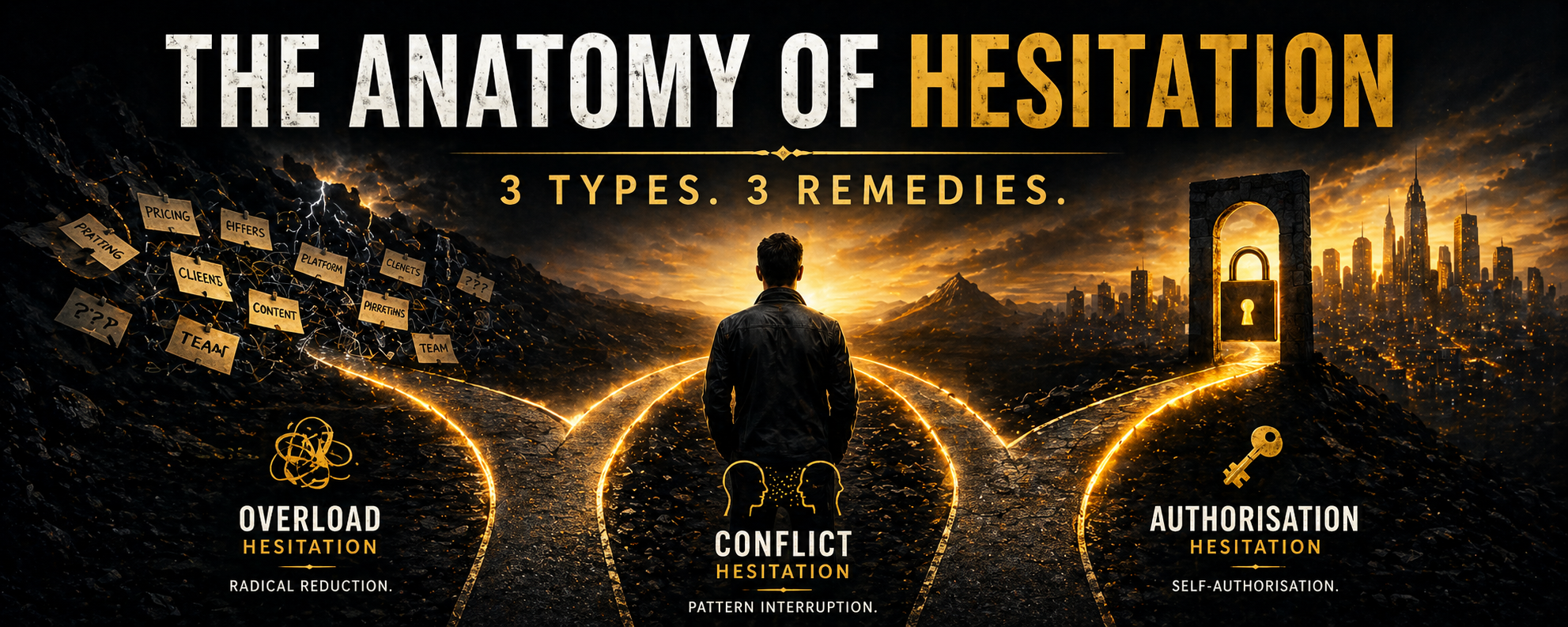
When you notice yourself building a stronger case for a move you’ve already decided to make, you are not gathering information. You are waiting for permission. That is Type 3. The case you are building will never feel complete enough to authorise itself.